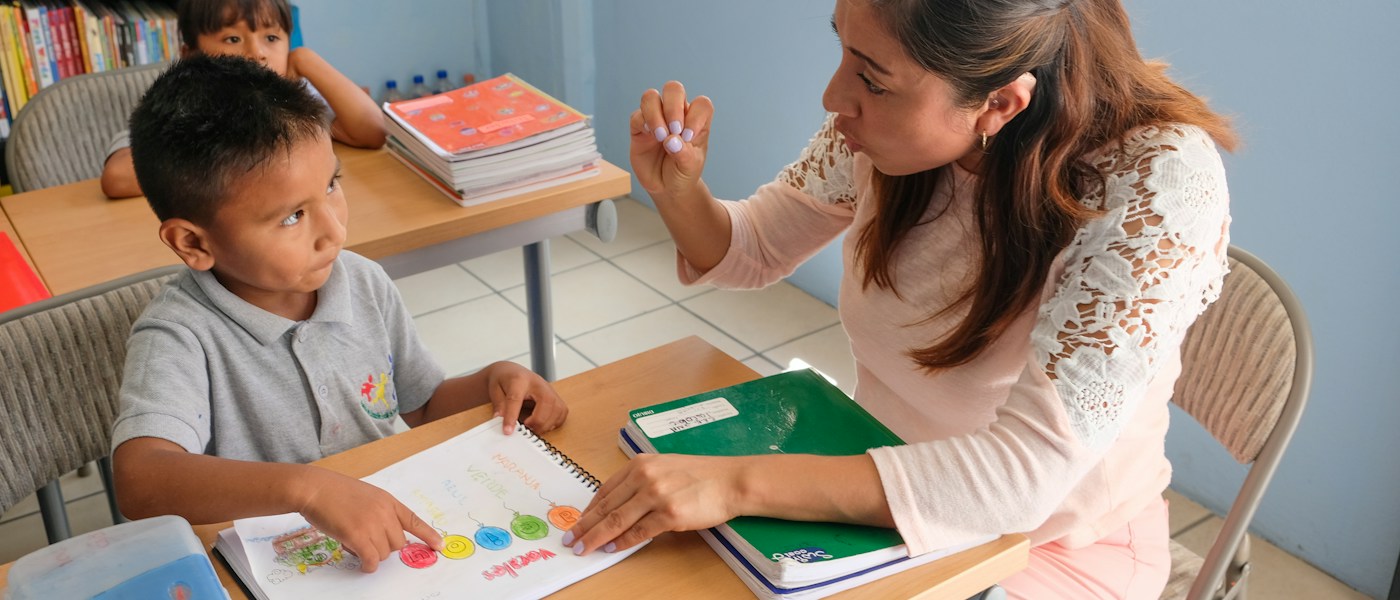
Walk into most schools and ask who supports students with dyslexia, ADHD, or autism. The answer is almost always the same: "Everyone does, a little." Which, as any honest educator will tell you, means: no one does, enough.
In school systems across India, the GCC, and Southeast Asia, special education remains an afterthought — a single resource room, a part-time coordinator, or a class teacher who attended a one-day workshop on "inclusive practices" and was handed a caseload of fifteen students with individual needs.
The Invisible Gap
Estimates suggest that 1 in 5 children has some form of learning difference — dyslexia, dyscalculia, ADHD, autism, or a language processing challenge. Most will never receive a formal identification during their school years. By the time they do, they've already internalized a story about themselves: that they are slow, lazy, or simply "not an academic person."
The tragedy isn't a lack of intent. Most class teachers genuinely want to support every child. The tragedy is structural: a single trained educator responsible for 35 students simply cannot provide the individualised attention that a student with dyslexia needs during guided reading, or ensure that a child with ADHD has the right movement breaks and sensory supports in place throughout the day.
"When the whole classroom is the only support system, the students who need the most end up getting the least."
— Dr. Kavitha Nair, Head of Inclusive Education, SpEd@school
What a Special Educator Actually Does
The title "special educator" is often misunderstood. In schools that haven't had one before, there's a common assumption that the role is about pulling struggling students out of class and drilling them on phonics worksheets. The reality is far more systemic.

A well-deployed special educator works across five core functions:
Assessment & Identification
Conducting or coordinating psychoeducational assessments to identify learning differences early — ideally in the first years of schooling, not at the point of failure.
IEP Design & Monitoring
Building individualised education plans in collaboration with families, class teachers, and therapists — and tracking progress against measurable goals.
Direct Instruction
Delivering targeted, evidence-based instruction in small groups or one-on-one settings using approaches like Structured Literacy, Orton-Gillingham, or Wilson Reading.
Classroom Consultation
Coaching class teachers on differentiation, accommodation implementation, and Universal Design for Learning principles so support extends beyond the resource room.
Family Partnership
Serving as the primary liaison between the school and the student's family — explaining assessments, goals, and progress in plain language and building shared ownership of outcomes.
The Ripple Effect on All Students
One of the strongest arguments for investing in special education expertise is that it makes the whole school better — not just for the 20% who have identified learning differences.
When a special educator trains classroom teachers on differentiation, every student benefits from clearer explanations, multiple means of representation, and more flexible pacing. When IEP processes improve, communication across the whole school becomes more structured and data-driven. When early identification rates improve, teachers spend less time managing challenging behaviour that was actually a learning need in disguise.
RESEARCH FINDING
Source: National Center for Learning Disabilities (2023), cross-school outcome study, n=412 schools
The reason is straightforward: learning differences often present first as attention, motivation, or behaviour challenges. Without someone trained to distinguish between a student who "won't" and a student who "can't", class teachers default to discipline approaches that don't address the underlying need — and the student falls further behind.

Making the Case to Leadership
For educators who want to advocate for a dedicated SPED role at their school, the pitch to leadership needs to address three things: cost, outcomes, and risk.
On cost
Frame the investment against retention. The average cost of replacing a burned-out class teacher — recruitment, onboarding, and the learning curve for a new hire — exceeds ₹4–6 lakh per departure. A special educator who supports 4–5 teachers reduces the overload that drives attrition. In CBSE schools with SPED compliance requirements, the cost of non-compliance (parental complaints, inspection failures, reputational damage) typically exceeds the hiring cost many times over.
On outcomes
Present the numbers: IEP completion rates, identification timelines, parent satisfaction scores. Schools that can demonstrate measurable SPED outcomes attract families who are actively seeking inclusive options for their children — a growing, high-value market segment in urban India and the GCC.
On risk
Inclusion is now a legal mandate. The RPWD Act 2016 and NEP 2020 both require schools to provide reasonable accommodations and individualised support for students with disabilities. Without a qualified SPED professional, schools face legal exposure. Document that the role isn't just a value-add — it's due diligence.
What Policy Requires
Across the markets SpEd@school serves, the policy landscape has shifted decisively toward mandated inclusion. Here's what's relevant by jurisdiction:
- RPWD Act 2016 mandates reasonable accommodation
- NEP 2020 requires inclusive education infrastructure
- CBSE guidelines: schools must have a CWSN coordinator
- RCI requires certified professionals for assessment
- ADEK inclusion mandate: all schools must accommodate students of determination
- Dubai Inclusive Schools Index — SPED capacity is a rating factor
- KSA Vision 2030 includes measurable inclusion targets
- Oman and Qatar expanding mandatory inclusion policy
First Steps for Schools
If your school doesn't yet have a dedicated special educator, or is looking to better support the one you have, here's a practical starting sequence:
Audit your current identification data
How many students currently have formal diagnoses? How many have teacher-reported concerns but no assessment? The gap between these numbers reveals your unmet need. Most schools are surprised by how large it is.
Define the role clearly
Don't inherit a vague 'resource teacher' role. Write a job description that specifies caseload size (industry standard: 15–25 students per FTE), expected outputs, and how the role connects to class teachers, therapists, and administration.
Invest in tools, not just people
A qualified SPED professional without the right systems — a proper IEP builder, screening tools, a progress monitoring dashboard — will spend 60–70% of their time on paperwork. Tools like SpEd@school's SPEED LDS are designed to give those hours back to direct instruction.
Build a professional development culture
SPED practice evolves. Certification is a starting point, not a destination. Budget for annual CPD — conferences, supervision hours, and access to platforms like SpEdStudio — and you'll retain your specialist longer and see better outcomes.
"The question isn't whether your school can afford a special educator. It's whether your students can afford not to have one."
Every school that has made this investment — with the right person, the right systems, and the right mandate — reports the same thing: within a year, they wonder how they ever ran without it. The students who were previously invisible become visible. The teachers who were burning out get a genuine partner. The school becomes a place where every learner has a real chance.
That's not idealism. That's what a well-deployed special educator makes possible, every day.
Dr. Kavitha Nair
Head of Inclusive Education, SpEd@school
Dr. Nair has 18 years of experience in special education, assessment, and school systems change across India and the UAE. She holds a doctorate in Educational Psychology from TISS Mumbai and leads SpEd@school's research and curriculum team.